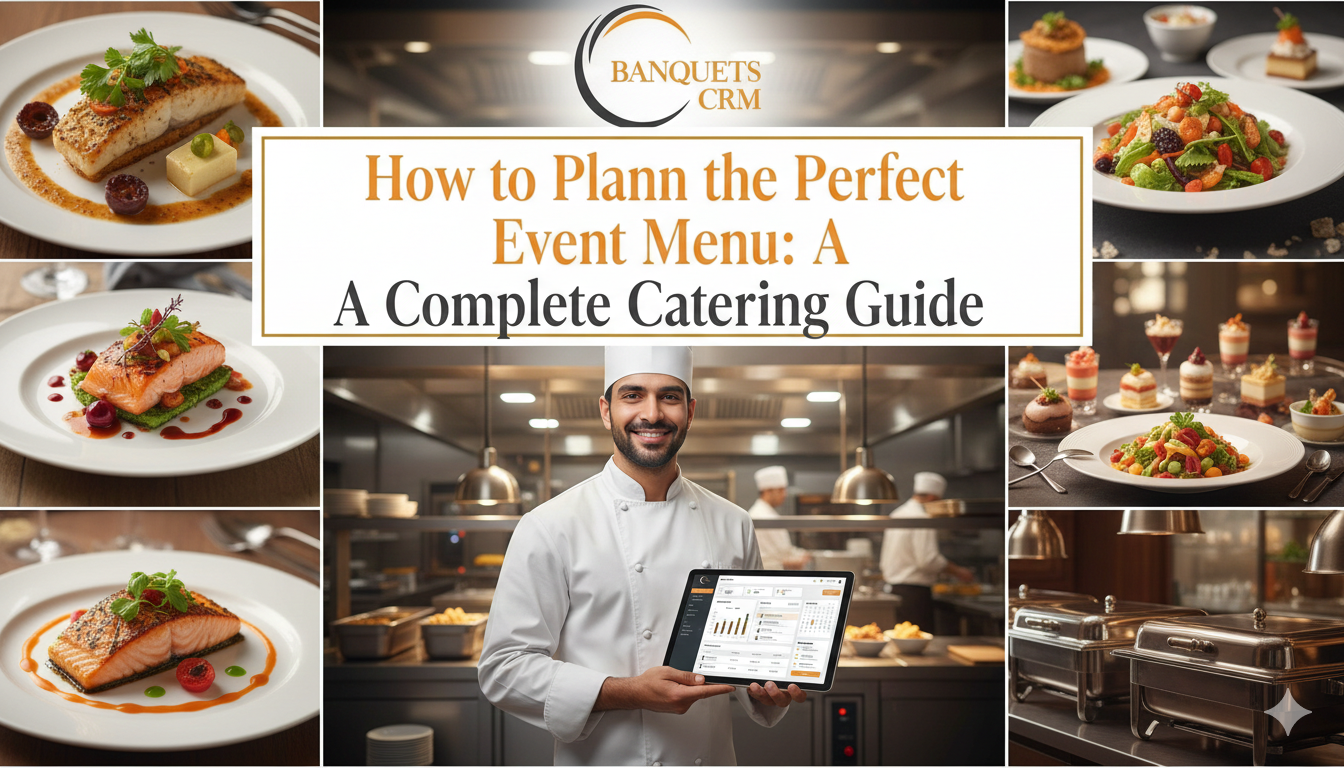
How to Plan the Perfect Event Menu: A Complete Catering Guide
How to Plan the Perfect Event Menu: A Complete Catering Guide
The food you serve can make or break your event. Here's everything you need to know about planning a menu that delights guests and stays within budget.
Why Menu Planning Matters
Food is more than just sustenance at an event—it's an experience, a conversation starter, and often one of the most memorable elements. Guests may forget the decorations or music, but they'll remember if the food was exceptional or disappointing.
Good menu planning balances multiple factors: guest preferences and dietary needs, budget constraints, seasonal availability, presentation and visual appeal, practical serving logistics, and the overall theme and formality of your event. Get this balance right, and your catering becomes a highlight. Get it wrong, and even the best venue and entertainment can't save the experience.
Step 1: Understanding Your Guests
Gather Dietary Information Early
Modern events require accommodating various dietary needs. Send out questionnaires with your invitations asking about allergies, vegetarian or vegan preferences, religious dietary restrictions, and specific food intolerances. This information is crucial for inclusive planning.
Consider Cultural and Religious Requirements
Different cultures and religions have specific dietary laws. If you're hosting a diverse group, ensure your menu respects these requirements. Halal, kosher, Hindu vegetarian, and other options should be clearly labeled and properly prepared.
Age Range Matters
A menu perfect for young adults might not work for an event with many elderly guests or children. Consider texture, spice levels, and familiar options that appeal across generations.
Step 2: Setting Your Budget
Per-Person Cost Calculation
Determine your total catering budget, then divide by expected guest count. Remember to account for service charges (typically 15-20%), gratuity for staff, rentals if needed (plates, glasses, utensils), and a 10% buffer for last-minute additions.
Where to Splurge and Where to Save
You don't need to cut corners everywhere. Consider splurging on the main course, signature cocktails, or dessert presentation while saving on passed appetizers (fewer varieties but larger quantities), basic bar options instead of premium only, and simple garnishes instead of elaborate decorations.
Seasonal Savings
Ingredients in season are significantly cheaper and taste better. A summer menu featuring berries and tomatoes costs less than demanding these same items in winter. Work with your caterer to design menus around seasonal availability.
Step 3: Choosing Your Service Style
Plated Dinner Service
Pros: Elegant presentation, controlled portions, predictable timing, dietary needs easily accommodated with pre-selected meals.
Cons: More expensive due to labor, requires accurate guest count, less variety for guests.
Best for: Formal weddings, corporate galas, seated dinners with 50-200 guests.
Buffet Service
Pros: Greater variety, guests choose portions, more casual and interactive, typically less expensive.
Cons: Requires more space, can create long lines, harder to control portions, food waste if not managed well.
Best for: Large casual gatherings, diverse guest preferences, events with flexible timing.
Family-Style Service
Pros: Promotes conversation and community, feels warm and intimate, good portion control, less staff-intensive than plated.
Cons: Requires adequate table space, some dishes may run out, slower service than buffets.
Best for: Intimate gatherings, rustic or casual events, cultural celebrations.
Cocktail Reception with Stations
Pros: Encourages mingling, very flexible, allows for creative presentation, can be cost-effective.
Cons: Guests may not eat enough, requires good traffic flow planning, can feel too casual for formal events.
Best for: Networking events, modern receptions, large standing events.
Step 4: Designing Your Menu
The Appetizer Course
Start with 2-3 passed appetizers or a small appetizer station. Choose options that are easy to eat while standing, won't drip or make a mess, represent different flavors (something savory, something light), and accommodate dietary restrictions.
Examples: Caprese skewers, vegetable spring rolls, stuffed mushrooms, shrimp cocktail, bruschetta varieties.
The Main Course
This is your centerpiece. For plated service, offer 2-3 choices (typically one chicken, one beef/pork, one vegetarian). For buffets, provide 3-4 main dishes representing different proteins and one substantial vegetarian option.
Balance is key: Pair rich dishes with lighter options, include familiar favorites alongside adventurous choices, ensure proper protein variety, and consider cooking methods (not everything should be fried or grilled).
Side Dishes
These complement your mains and shouldn't be afterthoughts. Include both starch (rice, potatoes, pasta) and vegetables, consider color variety for visual appeal, offer at least one lighter, fresh option, and ensure sides work with multiple main dishes.
Dessert
End on a high note with wedding cake plus a dessert station, individual plated desserts, dessert buffet with 4-5 options, or coffee and dessert bars. Consider offering something light alongside rich options and always include a non-chocolate choice for those who don't enjoy chocolate.
Step 5: Beverage Planning
Bar Service Options
Full open bar (all drinks covered), limited open bar (beer, wine, select cocktails), cash bar (guests pay), or drink tickets (hybrid approach).
Quantities and Timing
General rule: expect each guest to consume 1-2 drinks in the first hour, then one drink per hour thereafter. A 4-hour event averages 4-5 drinks per guest. Account for non-drinkers (about 20-30% of guests) and adjust accordingly.
Signature Cocktails
One or two signature drinks add personality and can be cost-effective. Pre-batched cocktails reduce bartender workload and ensure consistency. Make sure you offer both alcoholic and non-alcoholic signature options.
Non-Alcoholic Options
Never neglect non-drinkers. Offer flavored sparkling water, fresh juice options, coffee and tea service, and interesting mocktails (not just soda). These guests deserve good beverage options too.
Step 6: Practical Considerations
Portion Sizes
Work with your caterer to determine appropriate portions. Protein is typically 6-8 oz per person for sit-down, 4-6 oz for buffet (guests take multiple items). Sides are usually 4-6 oz per person of each item. For appetizers, plan 5-7 pieces per person for a one-hour cocktail hour.
Timing Your Service
Coordinate with your venue and coordinator: cocktail hour should be 60-90 minutes, salad course (if separate) 15-20 minutes, main course service 30-45 minutes, dessert service 20-30 minutes. Build in buffer time for speeches, toasts, and transitions.
Food Safety
This is non-negotiable. Ensure your caterer is licensed and insured, ask about food handling procedures, understand how long food can safely sit out, require proper heating and cooling equipment, and always have backup refrigeration available.
Step 7: Tasting and Finalization
Schedule a Tasting
Never book a caterer without tasting their food. Bring your partner or a trusted friend for a second opinion, taste everything on your proposed menu, and ask questions about preparation, ingredients, and presentation.
What to Evaluate
During your tasting, assess flavor and seasoning, presentation and portion sizes, temperature (hot food hot, cold food cold), and whether dishes complement each other. Don't be afraid to request adjustments or substitutions.
Finalizing Numbers
Most caterers need final headcount 7-14 days before the event. Always round up slightly (5-10%) to account for last-minute additions. Discuss what happens if actual attendance differs from projections.
Common Menu Planning Mistakes to Avoid
Being Too Adventurous
While it's great to be creative, don't make every dish unfamiliar. Balance unique options with crowd-pleasers so everyone finds something they enjoy.
Ignoring Dietary Restrictions
Nothing makes guests feel worse than having no suitable food options. Always plan for vegetarians, vegans, gluten-free needs, and common allergies.
Choosing All Heavy Foods
Too many rich, heavy dishes leave guests feeling sluggish. Balance rich options with lighter fare, especially for afternoon events.
Insufficient Variety
Even if you love chicken, offering only chicken dishes won't please everyone. Provide options so guests with different preferences all find something appealing.
Forgetting About Leftovers
Discuss with your caterer what happens to extra food. Some venues allow you to take leftovers, others don't. Plan accordingly and consider donating extras to local shelters when possible.
Special Dietary Accommodations
Vegetarian and Vegan
These shouldn't be afterthoughts. Create substantial, satisfying options that are just as appealing as the non-vegetarian dishes. Think beyond pasta primavera to creative grain bowls, vegetable Wellington, or stuffed portobello mushrooms.
Gluten-Free
About 1 in 100 people have celiac disease, and many more avoid gluten. Ensure proper kitchen protocols to prevent cross-contamination and clearly label gluten-free options. Many dishes are naturally gluten-free—emphasize these.
Allergies
The most common allergens are peanuts, tree nuts, dairy, eggs, soy, wheat, fish, and shellfish. Your caterer should be able to provide detailed ingredient lists and prepare allergy-friendly alternatives safely.
The Final Touch: Presentation
Food presentation matters as much as taste. Work with your caterer on beautiful plating for sit-down meals, attractive buffet arrangements with height variation, clear, elegant labeling for each dish, garnishes that enhance without overwhelming, and thoughtful color combinations.
Remember that guests eat first with their eyes. An attractively presented meal creates anticipation and enhances the perceived value of your event.
Bringing It All Together
Planning the perfect event menu requires balancing taste, budget, dietary needs, and presentation. Start early, communicate clearly with your caterer, and don't be afraid to ask questions or request changes.
The best menus reflect both the occasion and the hosts' personality while ensuring every guest feels considered and cared for. When you achieve that balance, your catering becomes more than just food—it becomes a memorable part of your celebration that guests will talk about long after the event ends.
Take your time with this decision. Good menu planning makes a significant difference in your event's success, and the effort you invest in getting it right will pay dividends in guest satisfaction and cherished memories.