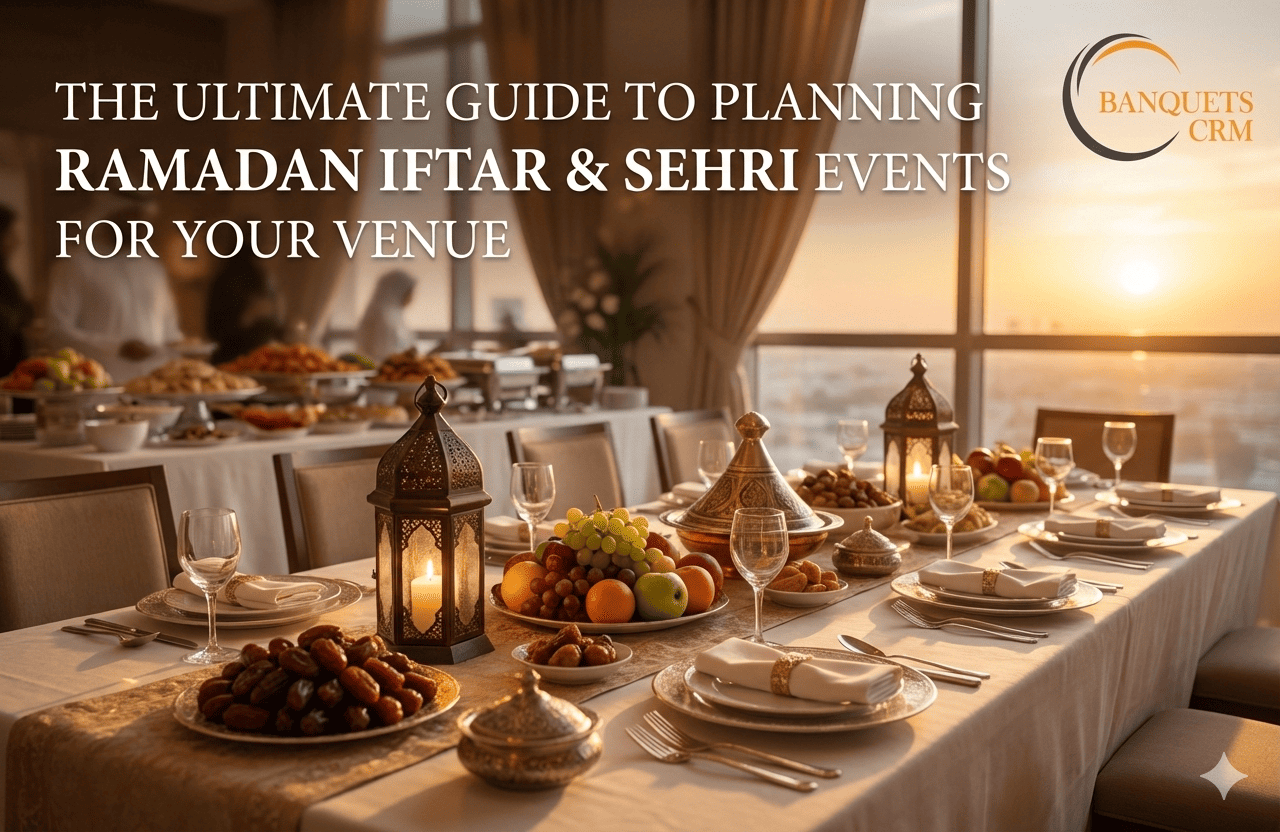
The Ultimate Guide to Planning Ramadan Iftar & Sehri Events for Your Venue
The Ultimate Guide to Planning Ramadan Iftar & Sehri Events for Your Venue
Ramadan presents unique opportunities for banquet halls. Here's how to host memorable, respectful, and profitable events during the blessed month.
Understanding the Ramadan Event Market
Ramadan, the holy month of fasting, brings a surge in community gatherings, corporate events, and family celebrations centered around Iftar (breaking fast at sunset) and Sehri (pre-dawn meal). For banquet halls and event venues, this represents a significant revenue opportunity—but only if you understand and respect the unique requirements of Ramadan events.
Unlike typical celebrations, Ramadan events have strict timing requirements, specific religious considerations, traditional food expectations, and a spiritual atmosphere that must be honored. Get these right, and you'll build lasting relationships with customers who return year after year. Get them wrong, and you'll damage your reputation in communities that value tradition and respect.
Types of Ramadan Events
Corporate Iftar Gatherings
Companies host Iftar events for employees, clients, and business partners as team-building and networking opportunities that honor Islamic traditions. These events typically involve 50-200 people and require professional presentation, punctual service (Iftar timing is non-negotiable), quality catering with variety, proper facilities for prayer if requested, and business-appropriate atmosphere alongside spiritual respect.
Family Iftar Celebrations
Extended families gather to break fast together, especially on weekends during Ramadan. Groups of 30-100 people seek comfortable, welcoming atmosphere, traditional food that reminds them of home, space for children who may be active, reasonable pricing for regular gatherings, and flexible timing around Maghrib prayer.
Community Iftars
Mosques, Islamic organizations, and community groups host large gatherings. These events involve 100-500+ people and need large capacity with efficient service, very affordable per-person pricing, traditional, authentic food, prayer facilities essential, and understanding of religious customs and protocols.
Charity Iftars
Organizations host Iftars for underprivileged communities or fundraising events. Variable size (50-300 people) requires simple but generous portions, strong value for money, possible donations or sponsorship arrangements, and respectful treatment regardless of pricing tier.
Sehri Gatherings
Pre-dawn meals are less common but growing in popularity, especially on weekends. Groups of 20-80 people need very early timing (1-4 AM depending on Ramadan schedule), light but satisfying food options, quick service to allow time for prayer before Fajr, and energizing atmosphere for early morning.
Critical Timing Considerations
Iftar Timing is Non-Negotiable
The most important aspect of any Iftar event is serving food precisely at sunset when fasting ends. This timing changes daily throughout Ramadan, getting slightly earlier each day. You must know exact Iftar times for your city, have food ready and served at the precise moment, coordinate with event organizers on timing expectations, and have backup plans if any delays threaten punctual service.
Even a 5-minute delay in serving Iftar can create significant dissatisfaction. Fasting individuals have waited all day—timing is sacred.
Event Flow Timeline
A typical Iftar event follows this pattern: Guests arrive 15-30 minutes before Iftar, dates and water served exactly at Iftar time (traditional way to break fast), Maghrib prayer (15-20 minutes)—many guests will pray, either at your venue or nearby mosque, main meal service (45-60 minutes), socializing and program if any (30-60 minutes), and departure or optional Isha prayer later in evening.
Plan your service around this flow rather than trying to impose typical event timing.
Menu Planning for Ramadan Events
The Opening: Dates and Traditional Items
Every Iftar begins with dates (following Prophetic tradition) and water or juice. Your service must include quality dates readily available, water and traditional drinks (Rooh Afza, lemonade, fresh juices), fruit chaat or fruit plates, and samosas or pakoras (traditional Iftar starters).
This opening course should be ready and served immediately at Iftar time.
Main Course Essentials
Ramadan menus should be generous and include traditional favorites. Essential items include biryani or pulao (absolute must-have), mixed grill or BBQ items, traditional curries (chicken, beef, or mutton), daal (lentils) and vegetable dishes, fresh naan or roti, raita and salads, and substantial variety since people are breaking a full day's fast.
Desserts and Beverages
Sweet dishes hold special importance during Ramadan including traditional desserts (kheer, gulab jamun, ras malai, jalebi), fresh fruits, traditional drinks (lassi, rooh afza, sugarcane juice), and tea and coffee service. Avoid alcohol completely—this is non-negotiable for Ramadan events regardless of your normal policies.
Dietary Considerations
All food must be Halal certified and prepared according to Islamic guidelines, clearly separated from any non-Halal operations if your venue handles both, vegetarian options for those who prefer them, and consideration for diabetics and health-conscious individuals (Ramadan fasting can affect blood sugar).
Venue Setup and Atmosphere
Prayer Facilities
Many guests will want to pray Maghrib after breaking fast. Provide designated clean, quiet prayer space with proper flooring (carpets or prayer mats), clear directions to nearby mosques if you can't provide space, separate areas for men and women if providing prayer facilities, and Qibla direction clearly marked.
Decoration and Ambiance
Ramadan decorations should be tasteful and respectful including Islamic calligraphy or geometric patterns, crescent moon and star motifs (traditional Ramadan symbols), lanterns and soft lighting creating peaceful atmosphere, green and gold colors (associated with Islamic tradition), and avoid anything that could be considered inappropriate or disrespectful.
Seating Arrangements
Consider cultural preferences where families often prefer sitting together, some guests may prefer traditional floor seating if available, separation of men and women seating areas for very traditional events, and space for elderly guests and children who may need special accommodation.
Service Excellence for Ramadan Events
Staff Training
Your team must understand Ramadan customs and requirements including significance of timing and fasting, proper terminology (Iftar, Sehri, Maghrib, etc.), respectful behavior during the holy month, and sensitivity to religious customs and practices.
Brief your staff before Ramadan season begins so they're prepared and confident.
Service Standards
Exceptional Ramadan service means absolute punctuality in food service, generous portions (people are breaking full-day fasts), efficient service without rushing the spiritual atmosphere, staff dressed modestly and professionally, and proactive problem-solving for any issues that arise.
Managing Large Groups
Community Iftars especially require careful planning including multiple service stations to avoid crowding, clear flow for guests from arrival to seating to service, adequate staff for the volume, and systems to handle 100+ guests receiving food simultaneously at Iftar time.
Pricing Strategy for Ramadan Events
Package Development
Basic Iftar Package
Dates, water, and juice, mixed fruit chaat, 2-3 main dishes (including biryani), naan and raita, 1-2 dessert options, and tea service. Price competitively at Rs. 800-1,200 per person depending on your market.
Premium Iftar Package
Everything in basic package plus expanded starter selection, 4-5 main dish options, BBQ/grill items, multiple dessert choices, special drinks (traditional beverages), and dedicated event coordinator. Price at Rs. 1,500-2,000 per person.
Corporate Iftar Package
Premium menu with professional presentation, custom decoration and branding options, audio/visual equipment if needed, prayer facility access, professional service staff, and flexible timing coordination. Price at Rs. 2,000-3,000 per person.
Volume Discounts
Consider offering discounts for large groups (100+ people), regular bookings (multiple Iftars during the month), advance booking (booking before Ramadan begins), and community organizations or charitable events.
Marketing Your Ramadan Event Services
Pre-Ramadan Marketing (Start 4-6 Weeks Early)
Launch Ramadan packages and pricing, reach out to past customers who've booked Ramadan events, contact corporate clients for employee Iftar bookings, connect with Islamic organizations and mosques, create social media content about your Ramadan offerings, and run targeted ads to Muslim community in your area.
Content Marketing
Share valuable content including Ramadan Iftar times for your city, recipes and traditions, photos of past Ramadan events at your venue, testimonials from satisfied customers, and tips for planning successful Ramadan gatherings.
Community Engagement
Build relationships within the Muslim community by sponsoring or hosting charity Iftars, partnering with mosques and Islamic centers, participating in community events leading up to Ramadan, and offering special rates for charitable purposes.
Operational Logistics
Booking Management
Ramadan bookings often come in clusters—many organizations want similar dates. Implement clear booking system with exact timing specifications, confirmation of Iftar time for event date, deposit and payment terms, and cancellation policies that are fair but protect your business.
Kitchen Operations
Ramadan events stress kitchens differently than normal events with multiple events potentially at same Iftar time, large volumes needed simultaneously, specific timing requirements that can't slip, and traditional dishes that take time to prepare properly.
Plan production schedules carefully and potentially increase kitchen staff during Ramadan season.
Supply Chain
Certain items see increased demand during Ramadan including quality dates (secure supplier early), traditional ingredients for special Ramadan dishes, fresh fruits for chaat and desserts, and high-volume staples like rice and flour.
Order early and maintain buffer inventory to avoid stockouts.
Maximizing Ramadan Revenue
Fill Your Calendar
Ramadan typically lasts 29-30 days. With proper planning, you could host one to three Iftar events daily in evening (main season), occasional Sehri events in early morning (less common but profitable), and weekend premium events when demand peaks.
A venue hosting just one Iftar daily for 25 days at average 80 people per event at Rs. 1,200 per person generates Rs. 2,400,000 in Ramadan season alone.
Package Upsells
Increase average booking value through premium food upgrades, enhanced decoration packages, professional photography services, extended time or additional services, and custom arrangements for special requests.
Post-Iftar Events
Some organizations want to continue celebrations after Iftar into the evening. Offer extended packages for Iftar + entertainment program, Iftar + business networking time, or Iftar + social gathering.
Building Long-Term Ramadan Success
Create Annual Tradition
Many organizations book the same venue year after year for Ramadan. Provide exceptional service that makes them want to return, offer loyalty discounts for repeat customers, reach out early each year to secure their booking, and continuously improve based on feedback.
Relationship Building
Ramadan customers often book other events throughout the year including Eid celebrations immediately after Ramadan, weddings and family gatherings, corporate events, and community functions.
Treat Ramadan customers as potential long-term relationships, not one-time transactions.
Reputation in Community
Word-of-mouth is powerful in Muslim communities. One successful event leads to multiple referrals. One poorly handled event damages reputation significantly. Always prioritize respect, quality, and proper Islamic protocols over short-term profit.
Common Mistakes to Avoid
Mistake 1: Treating Ramadan Events Like Any Other Event
Ramadan events have unique requirements. Don't apply your standard operating procedures without adjustment. The timing, atmosphere, and cultural sensitivities are different.
Mistake 2: Missing Iftar Timing
This is the cardinal sin of Ramadan event management. If food isn't ready exactly at Iftar time, you've failed regardless of how good everything else is. Build in safety margins. Test your systems. Have contingencies ready.
Mistake 3: Inadequate Prayer Facilities
If guests can't pray comfortably, they'll remember that more than the food. Either provide proper facilities or be clear upfront about what's available so they can plan accordingly.
Mistake 4: Inappropriate Atmosphere
Ramadan events should have peaceful, respectful atmosphere. Loud music, flashy decorations, or anything that seems disrespectful to the holy month will create negative impressions.
Mistake 5: Compromising on Halal Standards
Every item must be completely Halal with no exceptions or ambiguity. If you're not certain about any ingredient or supplier, don't use it. Your reputation depends on this.
Preparing for This Ramadan
If Ramadan is approaching, start preparations now by finalizing your Ramadan packages and menu, training staff on Ramadan customs and service standards, sourcing Halal-certified suppliers and ingredients, preparing decoration materials and prayer facilities, launching marketing to potential customers, and setting up booking systems for managing multiple events.
The venues that succeed during Ramadan are those that approach it with genuine respect, thorough preparation, and commitment to exceptional service that honors both the spiritual significance and the practical needs of fasting individuals breaking their fast.
Beyond Business: The Blessing of Service
Hosting Ramadan events is about more than revenue. When you provide the space where families reunite after a day of fasting, where communities gather in brotherhood, where the spirituality of Ramadan is celebrated—you're participating in something sacred.
Approach Ramadan season with both professionalism and humility. Deliver exceptional service not just for business success, but because these gatherings matter deeply to the people you serve. Do it with excellence, respect, and genuine care.
When you host Ramadan events well, you're not just running a successful business. You're facilitating blessings, creating memories, and earning the kind of goodwill that transcends typical customer relationships.
May this Ramadan bring blessings to your venue, your team, and every family and organization you have the honor to serve.