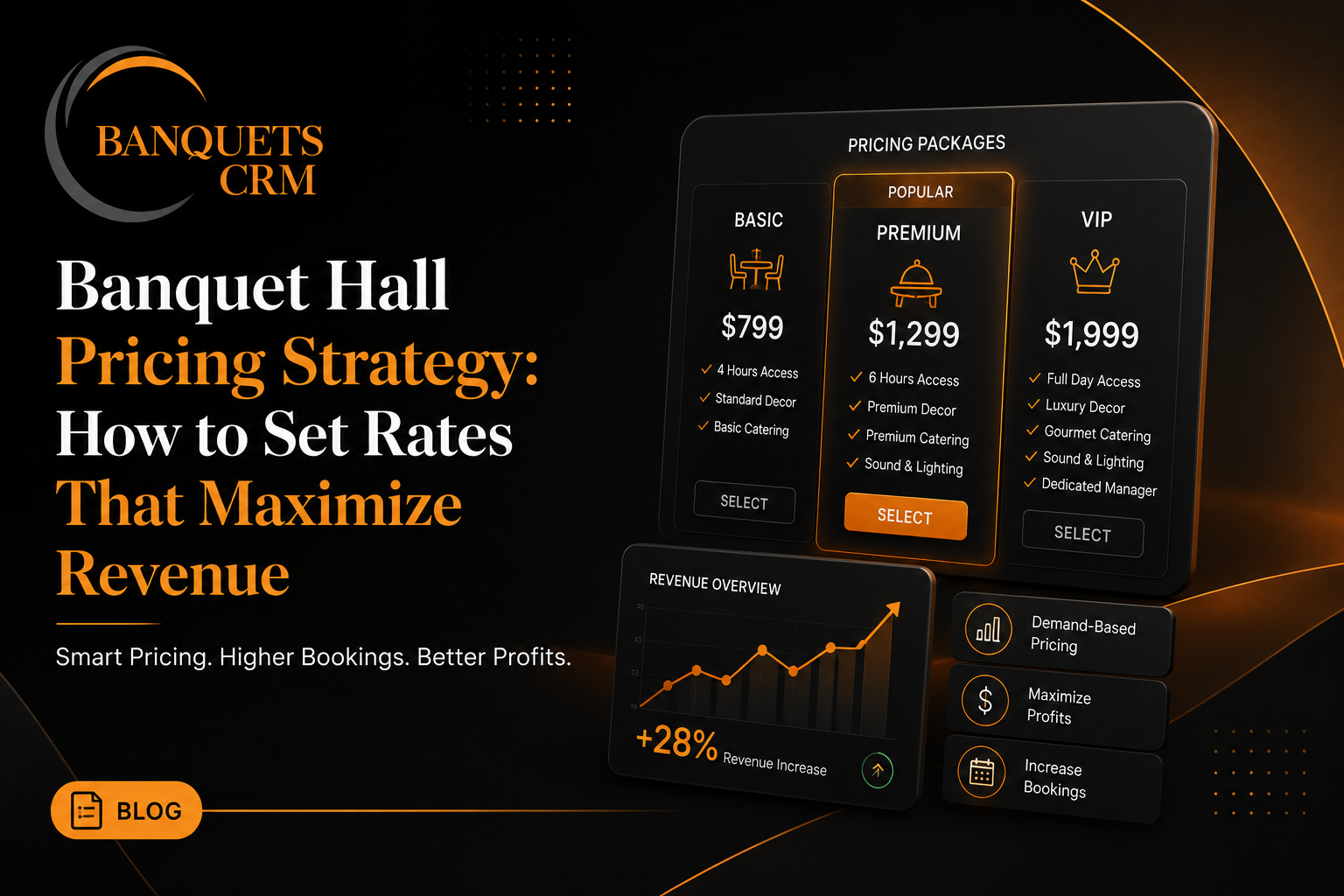
Banquet Hall Pricing Strategy: How to Set Rates That Maximize Revenue
Most banquet halls price the same way they did the day they opened: one rate card, maybe a "peak season" bump, and a lot of quiet discounting on the phone when a booking looks shaky. That leaves real revenue on the table on your busiest dates, and turns away bookings you would have happily taken on your slowest ones.
Flat Pricing Is Costing You Money in Both Directions
A single flat rate means you are charging a Tuesday in February the same as a Saturday in June — even though demand for those two dates is nowhere close to equal. Venues that move to demand-based pricing typically find two things happen at once: their peak-season revenue per event goes up, and their off-peak calendar fills in with events they would previously have turned away or discounted informally anyway.
A Simple Framework to Start With
1. Segment by demand tier, not just "season"
Instead of one seasonal rate, break your calendar into three or four demand tiers based on actual historical booking data: which dates fill up first, which days of the week get the most inquiries, and which months you consistently discount to fill. Price each tier separately.
2. Price the space, not just the date
If you manage more than one function space, each one has its own demand curve. Your ballroom might be booked solid on Saturdays while your smaller garden space sits empty on the same date. Bundling them into one price ignores that — and undersells your premium space while overpricing your smaller one.
3. Build discounting into the rate card, not the phone call
Ad-hoc discounting — the kind that happens when a client hesitates on the phone — is the single biggest driver of pricing inconsistency. If a date genuinely deserves a lower rate because it is low-demand, build that into the published rate tier so every staff member quotes it the same way, instead of improvising a number under pressure.
4. Track what you actually quoted, not just what you confirmed
Most venues can tell you their confirmed bookings for last year. Far fewer can tell you what they quoted and lost, and why. That data — quotes that didn't convert — is exactly what tells you whether a rate tier is priced too high.
Where This Breaks Down Without the Right System
None of this works if quotes live in someone's email and rate tiers live in someone's head. The moment pricing depends on which staff member answers the phone, you lose the consistency that makes tiered pricing effective in the first place.
BanquetsCRM's quotes and invoicing tools keep every quote tied to the lead and the event, so you can actually see conversion rates by rate tier over time — not just guess. Paired with venue management for per-space availability, you get a clear, data-backed view of where your pricing is working and where it isn't.
If you're managing a banquet hall or venue still pricing off a single flat rate card, this is one of the highest-leverage changes you can make this quarter. Get started free and see your booking data in one place.