How to Price a Catering Menu: A Step-by-Step Guide for Caterers
Ask ten caterers how they price a menu and you'll get ten different answers — and at least half of them will admit it's mostly instinct built up over years. Instinct works until it doesn't: until labor costs spike, until an event runs longer than expected, or until you win a bid so competitively priced that you actually lose money delivering it. Here's a framework that takes the guesswork out.
Start With Food Cost Percentage, Not Guesswork
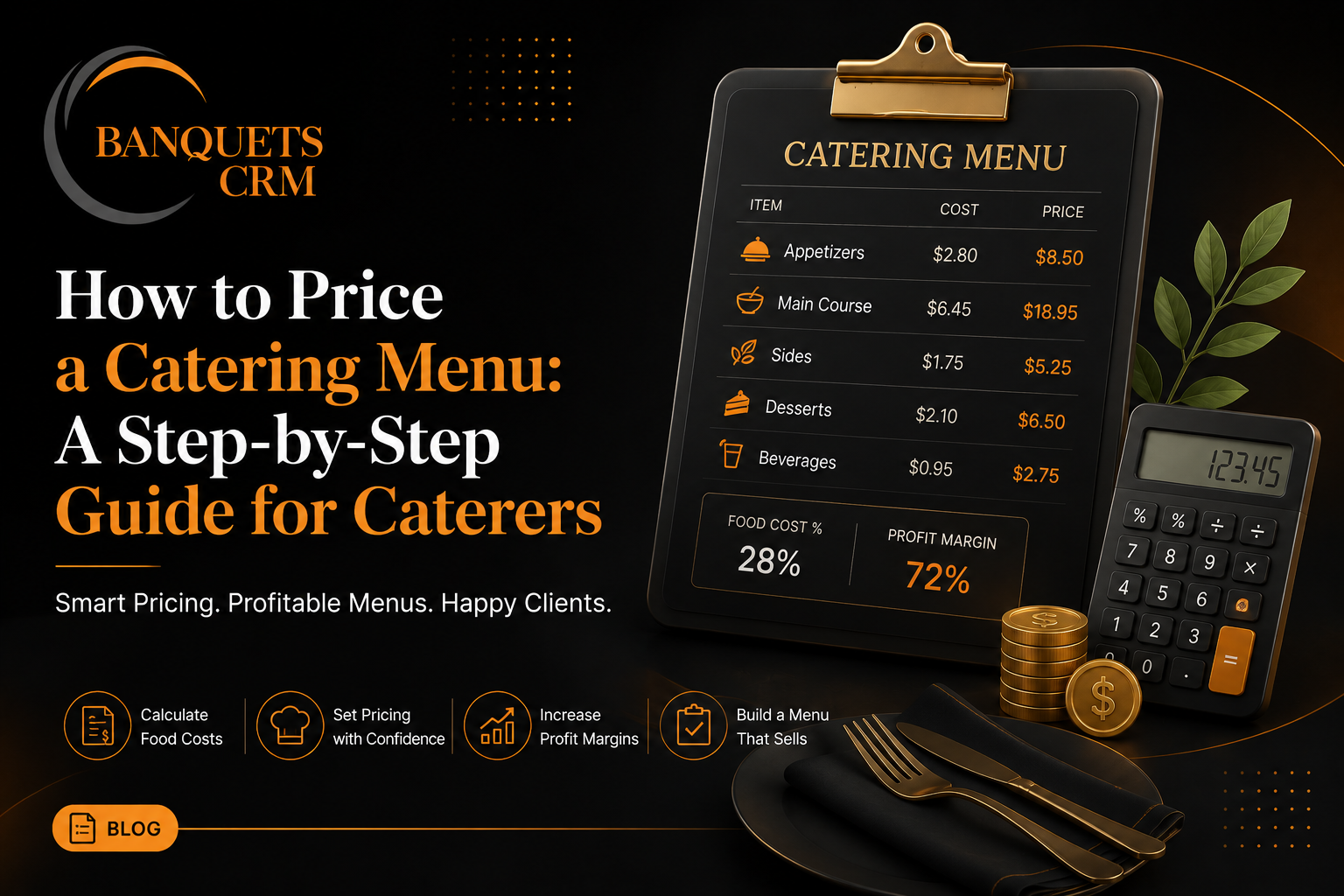
The industry standard is to price each dish so that raw food cost lands between 28% and 35% of the menu price, depending on your positioning. If a plate costs you $9 in ingredients and you're targeting a 30% food cost, your menu price is $9 ÷ 0.30 = $30. This single calculation, applied consistently, is the difference between a menu that's profitable across the board and one where some dishes quietly lose money every time they're ordered.
The Costs Caterers Forget to Include
- Labor for prep and service — not just the cooks, but servers, setup, and breakdown staff.
- Rentals — chafing dishes, linens, glassware — even when you own them, they have a depreciation cost.
- Transport — fuel, vehicle wear, and the staff time spent driving.
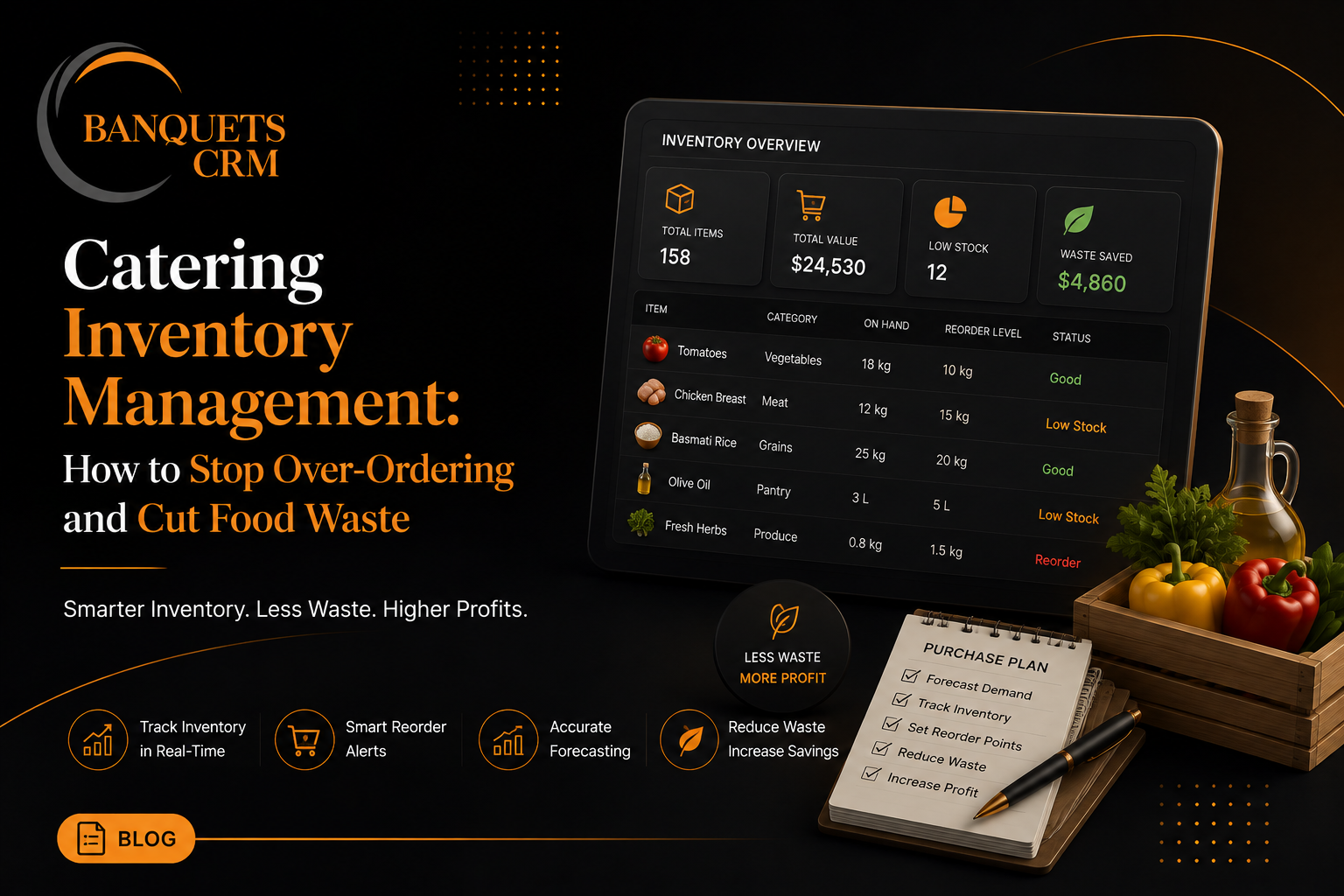
- Waste and shrinkage — the ingredients you buy that don't make it onto a plate.
- Your time quoting and coordinating — this is real overhead, and it needs to be baked into your margin, not treated as free.
Caterers who price only from the ingredient cost of the dish, without folding in these five categories, are almost always underpricing without realizing it.
Package Pricing vs. À La Carte
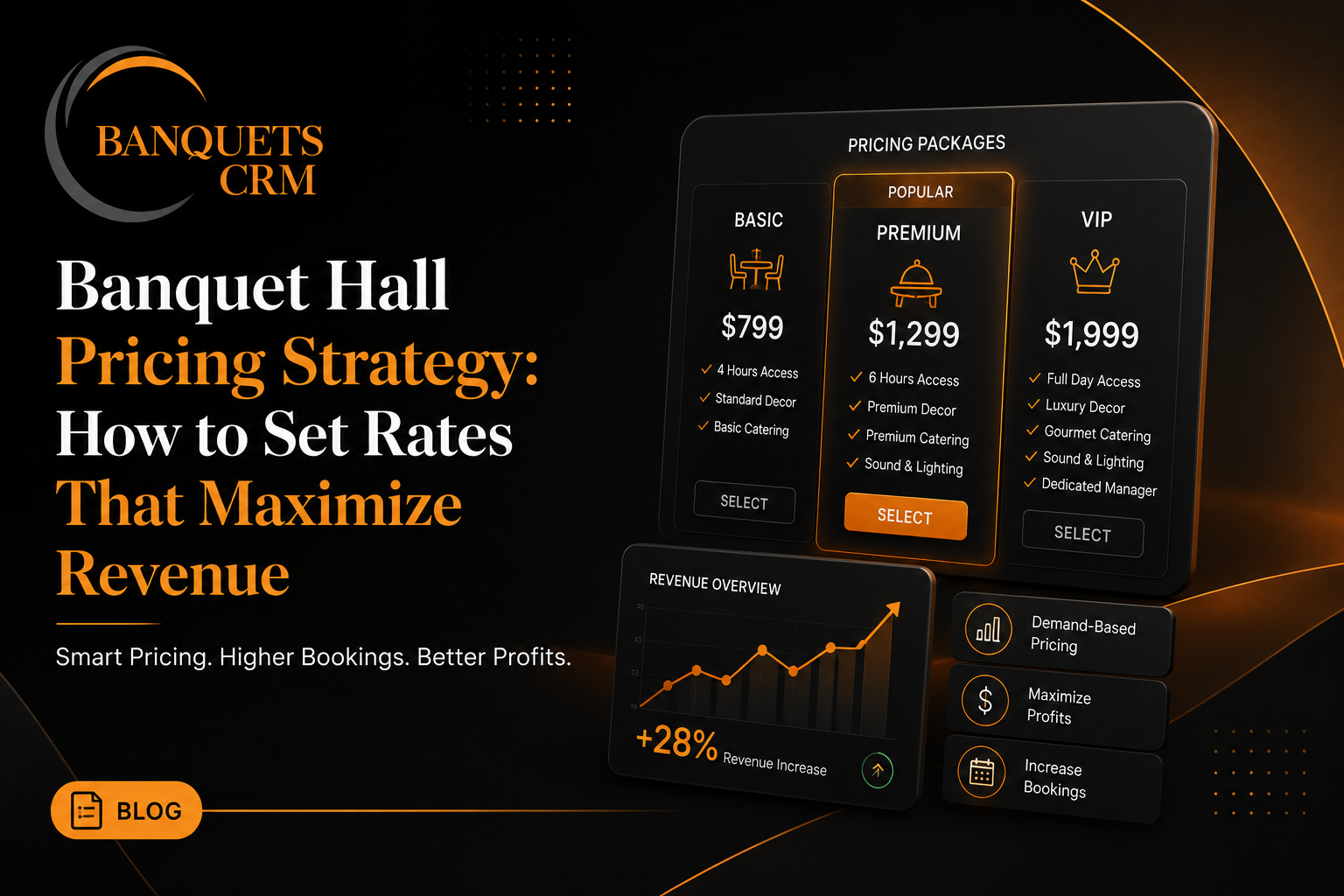
Package pricing (a fixed per-head rate for a defined menu) is easier for clients to understand and easier for you to forecast — but it only works if you've priced the package tightly around what's actually included. À la carte gives more flexibility but requires a pricing system that can hold accurate per-item costs, because manually recalculating a custom quote for every inquiry does not scale past a handful of events a month.
Guest Count Changes Are Where Margins Quietly Disappear
A client confirms 100 guests, then drops to 80 a week before the event — but your minimum ingredient purchases, rental sizes, and staffing were already locked in for 100. If your quoting process doesn't clearly separate fixed costs (rentals, minimum staffing) from variable, per-head costs (food, some labor), you'll eat that difference on every event with a late guest-count change.
Turning This Into a Repeatable Process
The caterers who price consistently well are the ones who don't rebuild their math from scratch for every quote. They have a menu structure with known per-dish costs, a quoting process that separates fixed and variable costs, and a system for tracking what was quoted versus what was actually delivered — so pricing gets more accurate every season, not just more familiar.
BanquetsCRM's menu management keeps your dishes, pricing, and dietary options in one place so every quote pulls from the same accurate numbers, and quotes convert straight into invoices without re-entering guest counts or line items by hand.
If you run a catering business, this is the kind of behind-the-scenes system that turns a good event into a profitable one. Start free and bring your menu pricing into one place.