The Hidden Cost of Running Your Banquet Hall on Paper in 2026
The Hidden Cost of Running Your Banquet Hall on Paper in 2026
If you're still managing leads in notebooks and tracking bookings on calendars, you're losing more money than you realize.
The Comfortable Trap of Paper
Walk into most banquet halls today, and you'll see a familiar scene: thick registers filled with customer details, sticky notes covering walls, WhatsApp chats serving as the booking system, and Excel spreadsheets that only one person really understands.
It feels manageable. You've been doing it this way for years. Why fix what isn't broken?
But here's the uncomfortable truth: it is broken. You just can't see the cracks because you're too close to them. Those notebooks are costing you bookings. Those spreadsheets are eating your time. That comfortable paper-based system is the reason you're working 12-hour days while your revenue stays flat.
Let's break down what this traditional approach is actually costing you.
The Money You're Losing (And Don't Even Know It)
Lost Leads: Rs. 500,000+ Per Year
A potential customer calls while you're managing an event. You scribble their number on a piece of paper. You promise yourself you'll follow up tomorrow.
Tomorrow comes. You're busy with three other things. The paper gets buried under other papers. The lead is forgotten.
This happens more often than you want to admit. Industry research shows that businesses lose 20-30% of leads simply due to poor follow-up. For a banquet hall booking even 50 events per year at an average value of Rs. 200,000, losing just 5 additional bookings annually costs you Rs. 1,000,000 in revenue.
And it's not just forgotten leads. It's delayed responses. When a customer inquires through social media at 9 PM, they expect a response within hours, not the next business day. Every hour you delay, the likelihood of winning that booking drops by 10%. By the time you respond the next morning, they've already started talking to three competitors.
Pricing Errors: Rs. 200,000+ Per Year
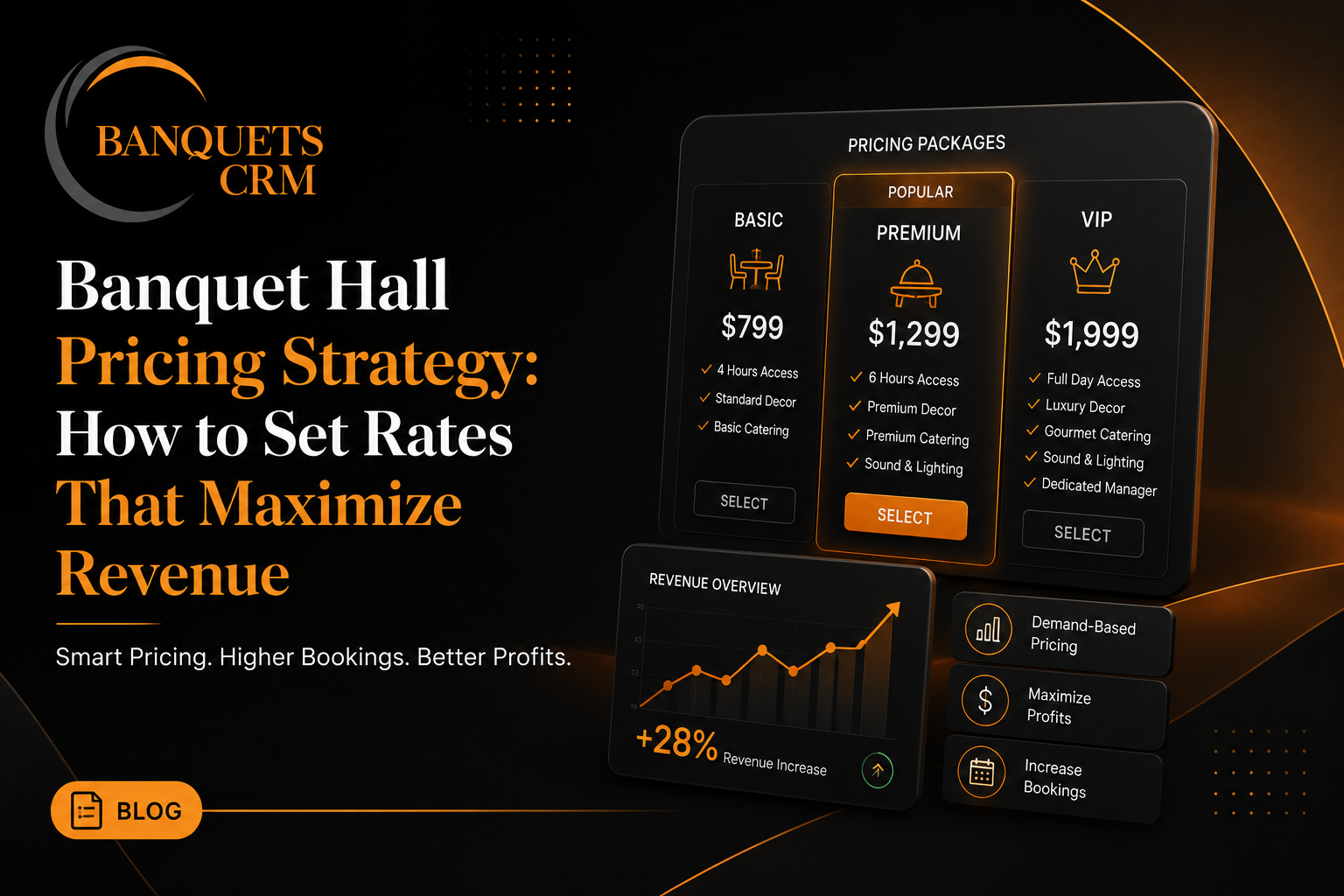
Manual calculations lead to mistakes. Sometimes you undercharge—losing profit on events you've already booked. Sometimes you overcharge—losing the booking entirely because your quote is higher than competitors for no good reason.
Let's be conservative: if you make pricing errors on just 10% of quotes, and those errors average Rs. 20,000, that's Rs. 200,000 in lost profit or lost bookings annually.
Then there are the inconsistencies. Customer A gets quoted one price. Customer B gets quoted something different for a similar event. When they compare notes at the event, you have an awkward situation and a reputation problem.
Time Waste: Your Most Valuable Resource
How many hours per week do you spend on:
- Searching through notebooks for customer details
- Manually calculating quotes
- Checking multiple calendars to verify availability
- Creating invoices from scratch
- Following up with customers individually
- Explaining event details to team members who don't have the information
If you're honest, it's probably 15-20 hours per week. That's nearly half of a full-time job spent on administrative work that software could do in minutes.
What's your time worth? If you value it at even Rs. 2,000 per hour, that's Rs. 30,000-40,000 per week, or Rs. 1,500,000+ per year in opportunity cost. Time you could spend on sales, service improvement, or simply having a life outside your business.
Double Bookings: Reputation Damage Beyond Money
A double booking doesn't just cost you one event's revenue. It costs you:
- Refund or compensation to the affected customer
- Emergency arrangements to fix the situation
- Negative reviews that impact future bookings
- Stress and damage to your team's morale
- Word-of-mouth damage that's impossible to quantify
One major mistake can haunt your business for years. And when you're managing bookings across multiple notebooks, calendars, and people's memories, these mistakes are inevitable.
The Invisible Costs of Paper Systems
No Data, No Strategy
Paper systems don't give you insights. You can't easily answer questions like:
- Which marketing channels bring the most bookings?
- What's your average booking value?
- Which team members close the most deals?
- What services do customers request most often?
- When are your peak booking periods?
Without data, you're making business decisions based on gut feeling rather than facts. You're flying blind in a competitive market where informed decisions determine who succeeds and who struggles.
Limited Scalability
Want to open a second venue? With paper-based systems, you're essentially starting from scratch. There's no centralized system, no standardized processes, no way to manage multiple locations efficiently.
Your business growth is capped not by market demand, but by how many details you can personally keep in your head.
Team Dependency
What happens when your key person is sick, on vacation, or leaves the company? If critical information lives in their notebook or their memory, you're in serious trouble.
Paper systems create single points of failure. Digital systems create institutional knowledge that survives personnel changes.
Customer Experience Suffers
Modern customers expect:
- Instant responses to inquiries
- Professional, detailed quotes
- Consistent communication
- Easy access to their event details
- Confidence that their special day is in capable hands
Paper systems make all of this harder. Your communication is slower, less professional, and more prone to errors. Customers notice, even if they don't say anything. They just book elsewhere.
Why Venue Owners Resist Change
If paper systems are so costly, why do so many venues still use them? A few common reasons:
\"We've Always Done It This Way\"
Familiarity feels safe. Change feels risky. But the biggest risk is staying the same while the market evolves around you.
\"We're Too Busy to Learn New Software\"
You're busy precisely because your current system is inefficient. Modern venue management software is designed to be intuitive—most users are fully operational within days, not months.
\"Technology Is Expensive\"
This was true ten years ago. Today, powerful solutions exist at every price point, including completely free options like BanquetsCRM. The question isn't whether you can afford to digitalize—it's whether you can afford not to.
\"Our Business Is Too Small\"
Small businesses benefit most from efficiency improvements. When you have limited resources, wasting time and losing leads hurts even more.
The Digital Alternative
Imagine a different reality:
A lead comes in through your website at 10 PM. The system automatically captures their details, sends an instant acknowledgment, and reminds you to follow up first thing in the morning. You don't lose them to competitors because you were asleep.
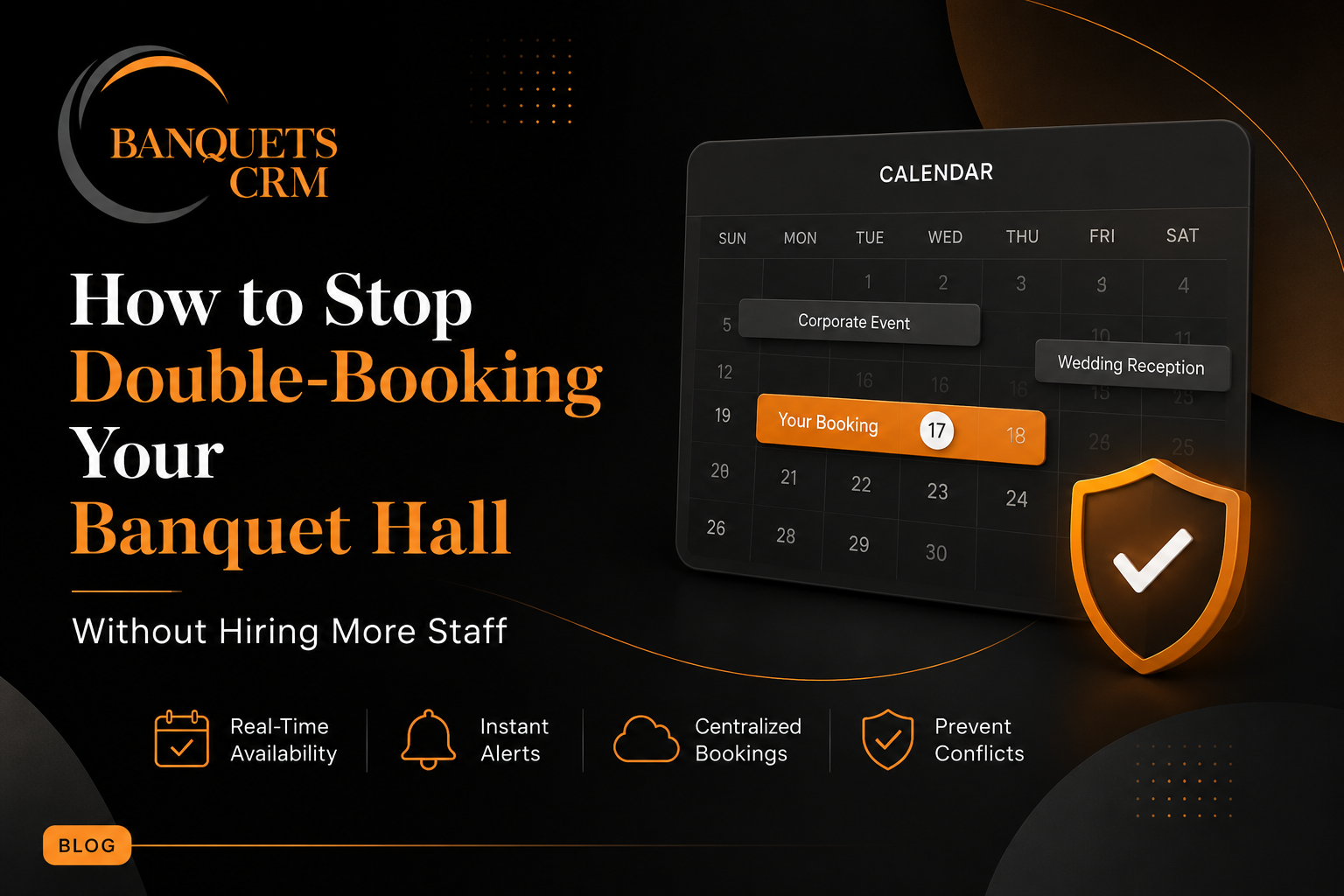
A customer calls asking about availability on a specific date. You check one centralized calendar and give them an instant, accurate answer. No need to cross-reference multiple books or call colleagues.
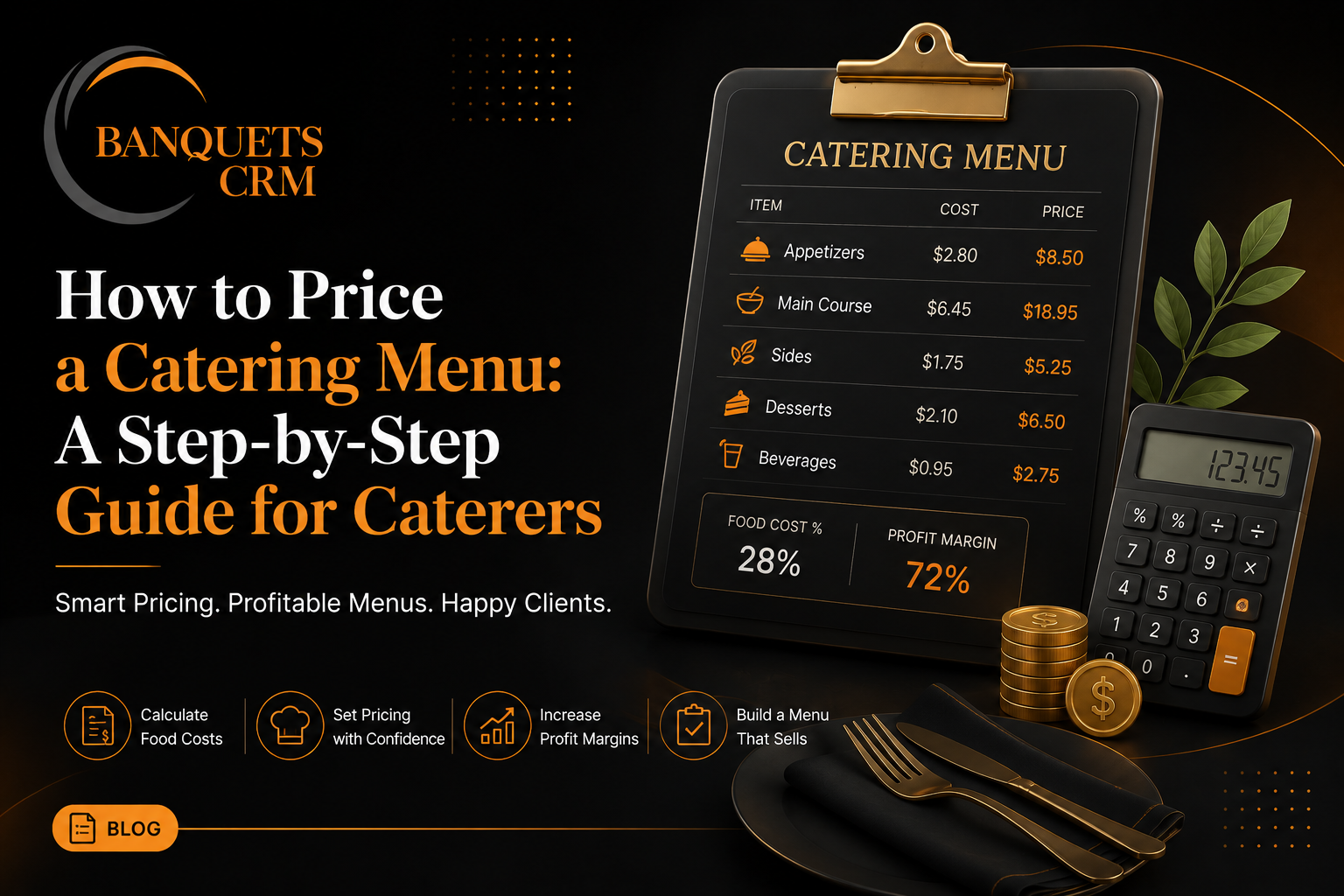
You need to create a quote. You select the venue, choose the menu, add decorations, and the system calculates everything instantly—accurate pricing, professional formatting, sent via email in minutes.
A team member is sick. No problem. Everyone else can access customer details, event requirements, and communication history in the system. Operations continue smoothly.
You want to understand which marketing efforts are working. You pull a report showing exactly where your bookings come from, what customers spend, and which services are most popular. You make informed decisions about where to invest.
This isn't a fantasy. This is how digitalized venues operate today. And they're capturing market share from competitors still stuck in the paper age.
The Real Cost of Waiting
Every day you delay digital transformation is another day of:
- Lost leads you'll never recover
- Time wasted on manual tasks
- Mistakes that damage your reputation
- Competitors pulling further ahead
- Stress from operating inefficiently
The question isn't whether to digitalize. The market has already answered that for you. The question is: will you do it proactively while you're still competitive, or reactively when you're struggling to survive?
Making the Transition
The good news: transitioning from paper to digital is easier than you think.
Start Simple
You don't need to digitalize everything overnight. Start with one area—maybe lead management or booking calendar. Get comfortable. Then expand.
Choose the Right Tool
Look for software built specifically for banquet halls and event venues. Generic CRMs don't understand your business. Purpose-built solutions do.
Get Your Team Involved
Change is easier when everyone understands why it's happening and how it benefits them. Show your team how digital tools will make their work easier, not harder.
Commit to the Transition
There will be a brief adjustment period. Push through it. Within weeks, you'll wonder how you ever managed without these tools.
The Bottom Line
Running your banquet hall on paper in 2026 isn't just old-fashioned—it's expensive, risky, and unsustainable.
The hidden costs add up to hundreds of thousands, if not millions, in lost revenue and wasted resources. Meanwhile, competitors who've embraced digital tools are operating more efficiently, serving customers better, and growing faster.
The technology exists. The solutions are accessible. The only question is: how much longer will you pay the hidden cost of paper before making the change?
Your business deserves better. Your team deserves better. Your customers deserve better.
It's time to leave the notebooks behind.
Ready to Calculate Your Real Costs?
Think about your own venue. How many leads did you lose last month? How much time did you waste on manual tasks? What's your exposure to double booking risks?
Now imagine operating without those costs. That's what digital transformation delivers.
BanquetsCRM offers everything you need to manage your venue professionally—leads, bookings, menus, quotes, invoices, and more. And it's completely free to start.
Stop losing money to paper systems. Join the digital revolution today.